
Insights
How Long Does It Take to Sell a Business in the UK? A Realistic Guide
Most owners underestimate how long selling a business takes. Here is the realistic timeline, stage by stage, and what tends to cause delays or speed things up.
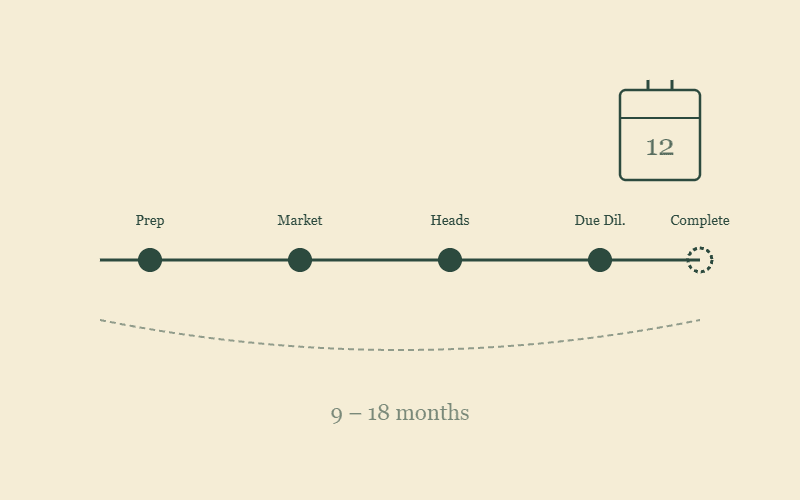
Key takeaways: Most UK business sales take between 9 and 18 months from first engaging a broker to completion. The timeline varies significantly depending on how prepared the business is, how quickly a buyer is found, and how smoothly due diligence and legal processes run.
The honest answer
Most UK SME owners take significantly longer to sell their business than they expect. When asked before they go to market, many sellers estimate six months. The realistic average is 9 to 18 months, with straightforward transactions sometimes completing in under a year and complex ones taking two years or more.
This is not because brokers or solicitors work slowly. It reflects the genuine complexity of what is being transacted. Selling a business involves finding a qualified buyer, negotiating commercial terms, conducting detailed due diligence, and completing a legal process that must protect both parties' interests. Each stage takes time, and each stage can stall for reasons outside anyone's control.
Realistic planning for your exit means planning for a 12 to 18 month process from the moment you first engage an adviser. Many of the most successful exits are planned two to three years in advance.
Stage 1: Preparation (1 to 3 months)
Before a business goes to market, your adviser needs to understand the business thoroughly. This information forms the basis of the Information Memorandum, the main marketing document shared with prospective buyers.
Preparation includes cleaning up financial records, compiling management accounts, documenting key contracts, and working through the valuation. If your accounts are not up to date, or there are adjustments needed to present the business's true earnings accurately, this stage takes longer.
Stage 2: Marketing and finding a buyer (2 to 4 months)
Once the IM is ready and the business is priced, the marketing phase begins. For a confidentially marketed business, this means approaching a targeted list of potential acquirers under non-disclosure agreements, running initial enquiries, and shortlisting the most credible parties.
How long this takes depends on the nature of the business, its size and sector, and current market conditions. A business in a sector with active strategic acquirers may receive indicative offers within four to six weeks of going to market. A more unusual business in a niche sector may take considerably longer.
This stage can also stall if the initial pricing is too aggressive. If the business is priced above where the market sees its value, the first round of approaches produces weak interest or no offers, and the marketing process has to be reset.
Stage 3: Heads of Terms (2 to 6 weeks)
Once a preferred buyer emerges, the parties negotiate and agree a Heads of Terms document. This sets out the key commercial terms — price, structure, any deferred consideration or earn-out, and the conditions attached to the deal. Getting to agreed Heads typically takes two to six weeks.
Stage 4: Due diligence (2 to 4 months)
Due diligence is typically the longest and most intensive stage. The buyer's team examines the business in detail to verify the information in the IM and identify any risks or issues. Financial due diligence reviews three to five years of accounts. Legal due diligence covers contracts, employment, intellectual property, property leases, litigation, and regulatory compliance.
Sellers can significantly speed up this stage by preparing a data room in advance. A well-prepared data room can cut weeks off the due diligence process and signals to the buyer that the business is well-run.
Stage 5: Legal documentation and completion (2 to 3 months)
Once due diligence is substantially complete, the lawyers draft and negotiate the Sale and Purchase Agreement. The SPA sets out the representations and warranties the seller makes about the business. Negotiating it typically takes four to eight weeks. Issues that commonly extend this process include warranty negotiations and earn-out provisions.
What typically causes delays
Across all stages, the most common causes of delay are: poorly prepared financials; pricing that takes two rounds of marketing to get right; due diligence issues that emerge mid-process; legal disputes over SPA warranties; and third-party consents that take time to obtain.
Buyer financing can also cause significant delays. Buyers using bank debt need their lending approved, and that process has its own timeline. A buyer who appeared credible may lose their bank approval midway through the process, requiring you to return to other parties — a delay of months.
How to run a faster sale
The sellers who complete quickest are those who are prepared before they go to market. This means clean, reconciled financials; a well-documented business; a prepared data room; and an experienced adviser managing the process. Appointing experienced corporate solicitors also makes a material difference — inexperienced legal teams are a common source of unnecessary delay and cost.
Frequently asked questions
Can I sell my business in less than six months?
It is possible in straightforward circumstances — a small, clean business with a buyer already identified, well-prepared financials, and experienced advisers on both sides. But it is not typical. Planning for six months is optimistic; planning for 12 is realistic; planning for 18 gives you a margin for the unexpected.
What is the fastest way to slow down a sale?
Undisclosed issues that emerge during due diligence. When a buyer discovers something material that was not in the IM, it destroys trust and typically triggers weeks of additional investigation, renegotiation, or withdrawal. Full transparency upfront is consistently better.
Do I need to tell my staff while the sale is in progress?
No — and in most cases, advisers recommend not doing so until the deal is at an advanced stage. Premature disclosure can cause key staff to leave, which damages the business's value and may trigger issues in due diligence.
What happens if a buyer pulls out mid-process?
Deals do fall through — industry estimates suggest around 30 to 40 per cent of transactions that reach Heads of Terms do not complete. If a buyer withdraws, you typically return to other buyers who expressed interest earlier, or remarket if necessary. This is one reason why experienced advisers recommend keeping other interested parties engaged throughout the process.
Useful next steps
Ready to go further? These free tools and guides are a good place to start.
Thinking about what’s next for your business?
Book a confidential, no-obligation discovery call and let’s talk through your options.