Insights
What Is an Earn-Out? How Earn-Out Deals Work When Selling Your Business
An earn-out ties part of your sale price to how the business performs after you have left. Here is what every seller needs to understand before agreeing to one — including the risks, the protections, and when it makes sense.
Key takeaways: An earn-out ties part of your sale price to the future performance of your business. Buyers use them to bridge valuation gaps, particularly where future profits are hard to predict. As a seller, you need to understand what you are agreeing to — including who controls the business during the earn-out period and how performance is measured.
What is an earn-out?
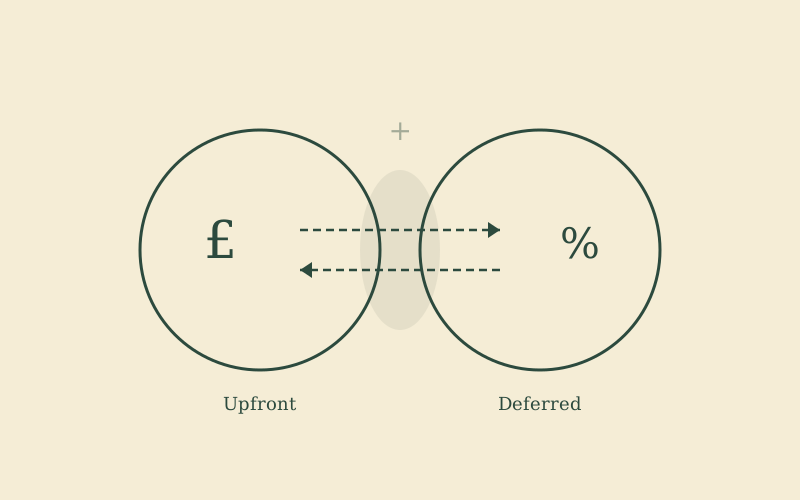
An earn-out is a deal structure where part of the purchase price is deferred — paid only if the business hits agreed performance targets after the sale has completed. The buyer pays you a base amount upfront, and the remaining consideration is earned over time depending on how the business performs.
Earn-outs are common in owner-managed businesses where much of the value lies in the owner's relationships, expertise, or key contracts. The buyer wants confidence that value will be maintained after the transition. The earn-out is their way of sharing that risk with you.
The deferred element is typically expressed as a multiple of EBITDA, revenue, or profit over a defined measurement period — often one to three years. If the business hits its targets, you receive the additional payment. If it misses, you receive less — sometimes nothing on the deferred portion.
Why buyers propose earn-outs
Buyers propose earn-outs for two main reasons. First, to bridge a valuation gap. If you believe your business is worth £5m and the buyer believes it is worth £4m, an earn-out can allow both sides to proceed: you get paid £5m if the business performs, the buyer pays £4m if it does not.
Second, to retain the seller. If you are integral to the business — the main client relationship, the key technical knowledge, or the face of the brand — the buyer has a strong interest in keeping you engaged after the sale. An earn-out creates a financial incentive for you to stay and perform during the transition period.
From the buyer's perspective, it is a risk management tool. From your perspective as the seller, it is a form of deferred consideration that may or may not materialise.
The seller's perspective: what you are really agreeing to
When you agree to an earn-out, you are agreeing to remain involved in the business — usually in an operational capacity — for the duration of the measurement period, while no longer having full control over the decisions that will determine whether you hit your targets.
That tension is the central challenge of every earn-out. The buyer now controls the business. They control resource allocation, pricing, hiring, and strategic direction. If they make decisions that reduce your earn-out performance — even legitimately, in pursuit of their own priorities — you may have limited recourse unless those scenarios are specifically addressed in the sale agreement.
This is why earn-outs require careful negotiation. The structure of the earn-out, the definitions of the performance metrics, and the operational protections you retain during the measurement period matter enormously — often more than the headline figure itself.
How earn-out targets are typically set
The most common earn-out metrics for UK SME sales are EBITDA (earnings before interest, tax, depreciation and amortisation), revenue, and gross profit. EBITDA is generally preferred because it focuses on operating performance and excludes financing decisions that are now the buyer's responsibility.
The targets are usually set at the current year's performance level, with the earn-out designed to pay out if performance is maintained or grown. Sometimes targets escalate year-on-year.
There are several definitional issues that need to be resolved clearly in the agreement. What costs are included or excluded? How are intercompany charges from the buyer's group handled? What happens if the buyer acquires another business during the earn-out period? What accounting policies govern the measurement? These are not abstract concerns — they are the specific points that earn-out disputes tend to turn on.
Earn-out duration and payment structure
Most earn-outs in UK SME transactions run for one to three years. Shorter periods (12 months) minimise your exposure but limit the total earn-out potential. Longer periods (three years) offer more upside if the business performs strongly, but expose you to more uncertainty and more potential for dispute.
Payments may be structured as annual instalments against each year's performance, or as a single payment at the end of the earn-out period against cumulative performance. Annual payments provide earlier liquidity and reduce the risk of a single bad year wiping out the entire deferred consideration.
Some earn-outs include a cap (maximum payment regardless of outperformance) and/or a floor (minimum payment even if targets are missed). Both are worth pushing for if the earn-out forms a material part of your consideration.
Key risks for sellers
The principal risk is that you do not receive the deferred consideration you expected, despite the business performing in line with your assumptions, because the buyer has made decisions that adversely affect the metrics. Common scenarios include: cost allocations from the parent group, redirecting key contracts to other group entities, changing the business's pricing model, or integrating the business into the buyer's operations in ways that make separate measurement difficult.
A second risk is operational — that you are retained in a role with insufficient authority to manage performance, while remaining accountable for hitting targets you cannot fully control.
A third risk is dispute. Earn-out disputes are common and expensive. If the earn-out agreement is poorly drafted, you may find yourself in litigation over accounting definitions or management decisions, which is a poor use of your time and energy in the years following a sale.
How to protect yourself in an earn-out
The most important protection is a well-drafted earn-out schedule in the sale and purchase agreement (SPA). This should specify: the exact definition of the performance metric (with worked examples if possible); which accounting policies govern measurement; which costs can and cannot be allocated to the earn-out business; what happens if the buyer makes an acquisition or disposal that affects the metrics; and what operational decisions require your consent during the earn-out period.
You should also negotiate for protections such as a cap and floor, annual payment instalments rather than a single end-of-period payment, and an independent accountant mechanism for resolving disputes without litigation.
Your corporate solicitor and accountant should both review the earn-out provisions carefully before you sign. The commercial headline is agreed between the principals; the earn-out mechanics are where the value is won or lost.
When an earn-out makes sense
An earn-out can be the right structure when: a valuation gap exists that cannot be resolved by other means; you are confident in the business's forward performance; you are willing to remain involved and engaged during the measurement period; and the earn-out provisions are drafted to your satisfaction.
It is typically the wrong structure when: you want a clean break; the business depends heavily on a buyer integration that will inevitably change its metrics; the buyer's culture or management approach is very different from yours; or the deferred consideration forms such a large part of the deal that the risk is disproportionate.
Many experienced M&A advisers recommend treating the deferred element of an earn-out as a potential bonus rather than guaranteed consideration. If you would be comfortable completing the deal for the base price alone, an earn-out is an acceptable risk. If the base price alone is below your acceptable minimum, reconsider the structure.
Frequently asked questions
Is an earn-out taxed differently from the initial consideration?
Earn-out payments are generally treated as capital receipts and taxed accordingly, subject to the same reliefs (including Business Asset Disposal Relief) as the initial consideration, provided the earn-out is a right to receive future consideration rather than employment income. If the earn-out is linked to your continued employment, HMRC may seek to tax it as employment income. This is an important structuring point and your accountant should review the earn-out mechanism carefully.
What happens if the buyer's decisions cause me to miss my earn-out targets?
Your recourse depends on what protections are built into the sale agreement. If there are adequate provisions — for example, prohibiting cost allocations above an agreed level, or requiring consent before integrating the business — you may have a claim for breach of contract. Without those protections, your options are limited. This is why the earn-out schedule matters as much as the headline consideration figure.
Can I leave before the earn-out period ends?
Usually, leaving early will trigger a leaver provision that reduces or eliminates the remaining earn-out entitlement. The circumstances under which you can leave without penalty, and what happens to the earn-out if you do, should be clearly addressed in the agreement before you sign.
How common are earn-outs in UK SME sales?
Earn-outs appear in a significant minority of UK SME transactions. They are more common in service businesses, professional practices, and owner-managed companies where personal relationships are central to the value. They are less common in asset-heavy or product businesses where the value is not dependent on the owner's continued involvement.
Useful next steps
Ready to go further? These free tools and guides are a good place to start.
Thinking about what’s next for your business?
Book a confidential, no-obligation discovery call and let’s talk through your options.